
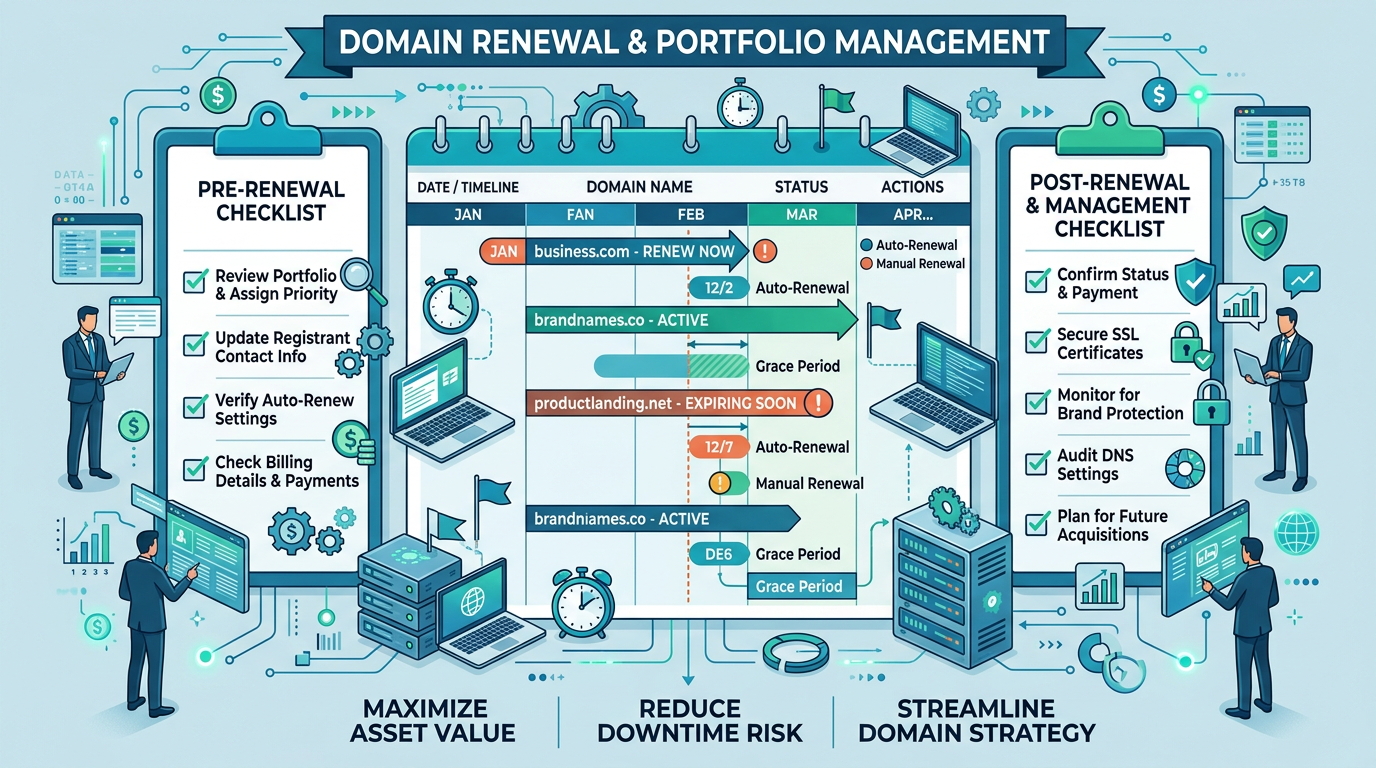
Large domain portfolios can become costly and unwieldy without regular review. Renewal fees compound across hundreds or thousands of names; administrative overhead—tracking expiry dates, managing multiple registrars, handling auto-renewals—adds friction. A disciplined optimisation process reduces cost while preserving strategic value. The goal is to retain domains that earn revenue, protect brands, or have development potential, and divest the rest.
Renewal timing matters. Renewing too early ties up capital; renewing too late risks losing a domain to expiration or drop-catch services. Many registrars offer grace periods, but relying on them is risky. Set reminders 60–90 days before expiry; batch renewals to simplify accounting. Bulk pricing varies by registrar—volume discounts can cut per-domain costs significantly. Consolidating portfolios with fewer registrars reduces management complexity and often improves pricing; migration requires care to avoid losing domains during transfer.
Criteria for divesting underperforming assets include traffic, revenue, brand relevance, and development cost. A domain with no traffic, no revenue, and no strategic value is a candidate for non-renewal or sale. Consider listing on marketplaces before dropping; even low-value names can recover a fraction of renewal cost. Be cautious with defensive registrations: dropping a brand-related domain can invite squatters. Document your divestment criteria and apply them consistently.
Auditing Your Portfolio
Start with a complete inventory. Export from all registrars; reconcile against internal records. Flag domains with unclear purpose, duplicate coverage, or legacy projects. Score each on traffic, revenue, brand alignment, and strategic fit. Tier the portfolio: Tier 1 (must keep), Tier 2 (review), Tier 3 (divest). Apply the tiers consistently and revisit annually. Without a structured audit, optimisation is guesswork.
When to Sell Rather Than Renew
Some domains have more value to others than to you. A keyword-rich name in a sector you have exited may attract buyers. List on Sedo, Afternic, or specialist marketplaces before non-renewal; even modest recoveries offset renewal cost. For higher-value names, brokers can identify strategic buyers. Timing matters: list with enough runway before expiry to allow negotiation. Dropping a domain without testing the market leaves value on the table.
Automation and Tools
Spreadsheets and manual tracking break down beyond a few dozen domains. Portfolio management platforms aggregate expiry dates, automate renewals, and provide reporting. Some integrate with marketplaces for listing and sales. API access from registrars enables custom workflows. For large portfolios, consider dedicated staff or outsourced management; the cost of a lost domain often exceeds the cost of proper oversight.
At Fullcover, we use portfolio health scoring to prioritise renewal and development investments. Each domain is scored on traffic, revenue, brand alignment, and strategic fit. High scorers get renewal priority and development budget; low scorers enter a review queue for divestment or repurposing. Annual portfolio reviews keep the process current. Optimisation is ongoing—market conditions, brand strategy, and domain performance change. Treat your domain portfolio as a managed asset, not a static inventory.